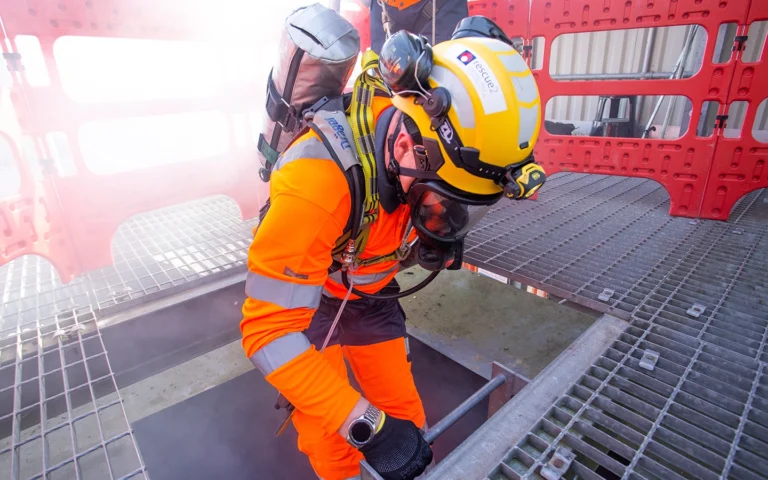
Not every confined space presents the same level of risk, but every confined space has the potential to become dangerous if it is not managed correctly. Medium risk confined space work often forms part of routine maintenance, inspection and operational activities across utilities, construction, manufacturing and industrial environments. Although these spaces may not require the same level of rescue provision as high risk confined spaces, they still demand competent personnel, effective planning and recognised training.
The City & Guilds Entrant and Entry Controller for Medium Risk Confined Spaces (6160-09) course from Rescue2 provides delegates with the practical knowledge and skills required to work safely in medium risk confined spaces while also understanding the responsibilities involved in controlling entry.
Designed for both entrants and entry controllers, the course helps organisations develop competence, support legal compliance and promote safer confined space working across a wide range of industries.

Understanding Medium Risk Confined Space Work
Confined spaces vary significantly depending on their location, purpose and the hazards they present. A medium risk confined space is one where identified hazards can be effectively managed through appropriate control measures and safe working procedures.
Examples may be found throughout sectors including utilities, manufacturing, construction and petrochemical industries, where maintenance, inspections and repair work regularly take place within enclosed or partially enclosed environments.
Although the risks may be lower than those associated with high risk confined spaces, workers can still face hazards such as restricted access, poor ventilation, changing atmospheric conditions and limited escape routes. These risks mean that anyone entering or controlling work in these environments must understand the correct procedures before work begins.
Who Is This Confined Space Course Designed For?
The City & Guilds 6160-09 qualification is intended for people who are directly involved in medium risk confined space operations.
The course is suitable for:
- Operatives required to enter and work within medium risk confined spaces.
- Entry controllers responsible for monitoring confined space activities.
- Personnel who require City & Guilds certification to meet employer or industry requirements.
- Organisations looking to improve competence across confined space operations.
Whether carrying out planned maintenance or routine operational work, delegates gain the knowledge needed to work safely while understanding the responsibilities that accompany confined space entry.
What Does the Course Cover?
Delivered over two days, the course combines practical learning with an understanding of recognised confined space procedures. Successful delegates receive a City & Guilds qualification that remains valid for three years.
Training can be delivered at Rescue2’s specialist training facility in Poling, West Sussex, or at customer premises across the UK where appropriate.
During the course, delegates develop the ability to:
- Prepare to work safely in medium risk confined spaces.
- Enter and exit confined spaces using safe working procedures.
- Carry out work while monitoring activities within the confined space.
- Respond appropriately to emergencies.
- Understand the principles of working safely in medium risk confined spaces.
- Apply recognised protocols and procedures.
- Understand the duties of an entry controller.
- Carry out equipment inspections and safety checks.
By combining practical exercises with recognised industry guidance, delegates build confidence in applying safe working practices during real confined space operations.
The Role of the Entry Controller
Safe confined space work depends on more than the people carrying out the task inside the space. Entry controllers play an equally important role by monitoring activities, maintaining communication and ensuring agreed procedures continue to be followed throughout the operation.
The course helps delegates understand these responsibilities and how effective coordination contributes to safer working conditions.
Monitoring who enters and exits the confined space, confirming safety arrangements remain in place and recognising when work should be paused are all important aspects of managing medium risk confined space activities safely.
Developing Safe Working Practices
Every confined space operation should begin with careful planning.
Before entry takes place, hazards need to be identified, suitable equipment selected and appropriate control measures implemented. Safe systems of work help ensure these arrangements remain consistent throughout the task rather than relying on individual judgement alone.
Training supports this process by helping delegates understand why procedures exist and how they should be applied during day to day operations.
Developing competence through structured learning also helps organisations promote consistency across multiple teams and sites, particularly where confined space work forms part of routine maintenance programmes.
Preparing for Emergencies
Even where risks have been reduced through planning and control measures, organisations must still be prepared to respond if something unexpected occurs.
The course introduces delegates to emergency procedures appropriate for medium risk confined space work, ensuring they understand how emergencies should be managed and the importance of following established arrangements.
Knowing how to recognise changing conditions and respond appropriately can help reduce delays and support safer decision making during confined space operations.
Emergency preparedness should always form part of the wider planning process rather than being considered only after work has started.
Why Accredited Training Benefits Employers
Choosing accredited confined space training provides employers with confidence that personnel have completed training aligned with recognised industry standards.
The City & Guilds qualification demonstrates that delegates have developed the knowledge expected for their role while providing a consistent benchmark for competence.
For organisations operating across multiple locations or managing large workforces, accredited training also supports consistency in working practices, helping supervisors and operatives follow the same recognised procedures regardless of where work is taking place.
This contributes to stronger safety cultures while supporting legal compliance and reducing the likelihood of avoidable incidents.
Supporting Multiple Industries
Medium risk confined space work is carried out across many different industries, each presenting its own operational challenges.
The City & Guilds 6160-09 course supports organisations working within:
- Utilities
- Construction
- Manufacturing
- Petrochemical
- Industrial maintenance
- Water and wastewater operations
Although working environments differ, the principles of safe confined space entry, communication, supervision and emergency preparedness remain consistent.
Providing personnel with recognised training helps organisations establish safe working practices that can be applied across a wide range of operational environments.
Building Competence for Safer Confined Space Operations
Safe confined space work relies on competent people, effective planning and consistent procedures.
The City & Guilds Entrant and Entry Controller for Medium Risk Confined Spaces (6160-09) course delivered by Rescue2 equips delegates with the knowledge needed to prepare for, enter and manage medium risk confined space operations safely.
As part of its wider confined space services, Rescue2 provides accredited training alongside consultancy, confined space classification, risk management support and specialist rescue provision. By combining practical training with operational expertise, Rescue2 helps organisations develop confident personnel while supporting safer confined space working across a broad range of industries.
To find out more about the course or discuss your organisation’s training requirements, contact the Rescue2 team today.
Rescue2 Ltd, The Old Stables, Decoy Lane, Arundel Road, Poling, West Sussex BN18 9QA
01903 871105
info@rescue2.co.uk
FAQs
1. What is a medium risk confined space?
A medium risk confined space is an enclosed or partially enclosed area where hazards have been identified and can be controlled through suitable procedures, equipment and safe systems of work. Although the risks are lower than in high risk confined spaces, competent training is still essential.
2. Who should complete the City & Guilds 6160-09 course?
The course is designed for operatives who enter and work in medium risk confined spaces, as well as entry controllers responsible for monitoring access, communication and safety throughout confined space operations.
3. How long is the Entrant and Entry Controller for Medium Risk Confined Spaces course?
The City & Guilds 6160-09 qualification is delivered over two days and remains valid for three years following successful completion.
4. What will delegates learn during the course?
Delegates learn how to prepare for medium risk confined space work, enter and exit safely, monitor work activities, respond to emergency situations, understand entry controller responsibilities, and carry out equipment inspections and safety checks.
5. Where can Rescue2 deliver this confined space course?
Training can be delivered at Rescue2’s specialist training facility in Poling, West Sussex, or at customer sites across the UK where suitable facilities are available.
6. Which industries is this confined space course suitable for?
The qualification is suitable for organisations working in utilities, water, construction, manufacturing, petrochemical and other industries where medium risk confined space work forms part of everyday operations.