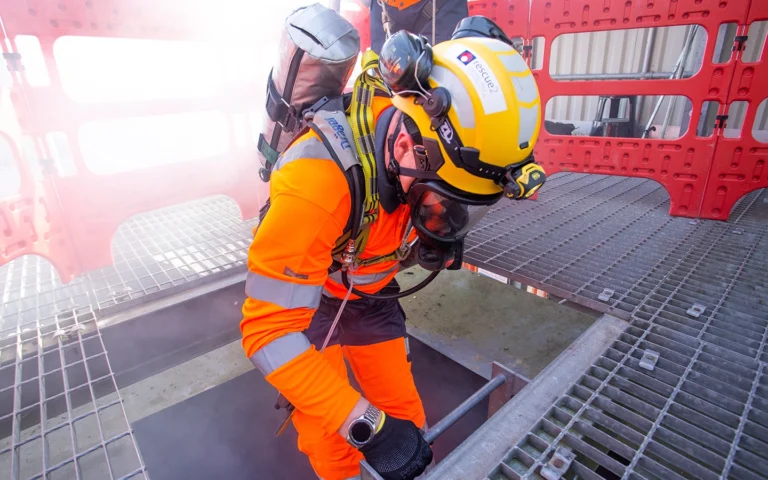
When an incident occurs inside a confined space, every second counts. Rescue operations require more than bravery or practical experience. They rely on trained teams who understand how to enter hazardous environments safely, work together effectively and recover casualties without putting themselves or others at unnecessary risk.
The City & Guilds Working as a Member of a Rescue and Recovery Team in Confined Spaces (6160-08) course, delivered by Rescue2, has been developed for those who form part of these specialist rescue teams. This accredited high risk confined space training course provides the practical skills and knowledge needed to support emergency rescue operations while following recognised industry procedures.
Designed for a wide range of industries, the qualification helps organisations develop competent rescue personnel who can respond safely and effectively when confined space emergencies occur.
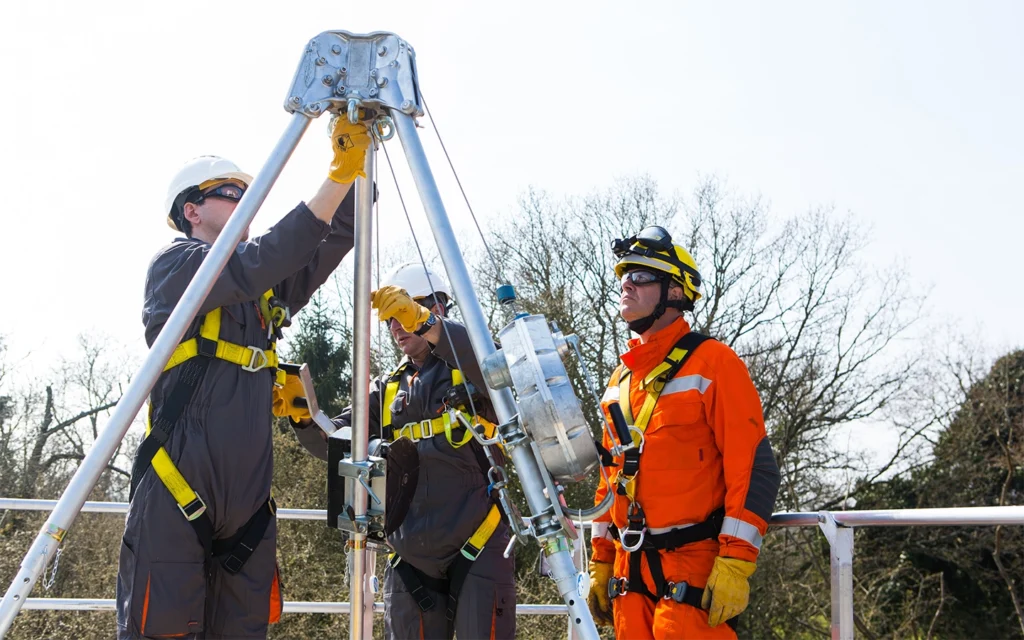
Why Specialist Rescue Training Matters
Confined space incidents are often complex and unpredictable. Restricted access, hazardous atmospheres and limited visibility can all make rescue operations significantly more challenging than standard emergency situations.
Attempting a rescue without the appropriate training can place additional people at risk. This is why organisations carrying out high risk confined space work should ensure rescue arrangements are established before work begins and that those responsible for emergency response have the necessary competence for their role.
Specialist training helps rescue teams understand how to work safely under pressure while following structured procedures designed to protect both casualties and rescuers.
What Is the City & Guilds 6160-08 Course?
The City & Guilds Working as a Member of a Rescue and Recovery Team in Confined Spaces (6160-08) qualification is a three day accredited course delivered by Rescue2.
It has been developed specifically for individuals who are required to enter high risk confined spaces as part of an organised rescue and recovery team.
Successful delegates receive a City & Guilds qualification that remains valid for three years.
Training is available at Rescue2’s specialist training facility in Poling, West Sussex, or can be delivered on client sites across the UK where suitable facilities are available.
Who Should Attend?
This qualification is intended for personnel who may be called upon to participate in confined space rescue and recovery operations.
It is suitable for individuals who:
- Work as part of confined space rescue and recovery teams
- Enter high risk confined spaces during emergency operations
- Support casualty recovery procedures
- Operate within planned emergency arrangements
- Require accredited high risk confined space training for their role
The course is applicable across both water and non water industries.
Water industry environments may include sewage treatment works, drain and sewer cleaning operations, potable water systems or confined spaces where flooding presents additional risks.
Non water applications include engineering, petrochemical, pharmaceutical manufacturing, vehicle production, construction, communications, utilities, power generation, gas, asbestos removal, quarries, mines and tunnelling.
What Will Delegates Learn?
The course combines practical exercises with theoretical learning to help delegates understand both the technical and procedural aspects of rescue operations.
Throughout the training, delegates learn how to:
- Carry out safety checks before rescue activities begin
- Enter and exit confined spaces safely as part of a rescue and recovery team
- Use rescue equipment and tools correctly
- Follow established rescue procedures
- Work safely alongside other rescue team members
- Understand the principles of confined space rescue and recovery
- Apply recognised rescue protocols throughout an operation
Rather than focusing solely on technical equipment, the course emphasises safe teamwork and the importance of following structured procedures during emergencies.
Working as Part of a Rescue Team
Successful confined space rescue depends on every team member understanding their responsibilities.
Rescue operations require effective communication, careful coordination and a consistent approach throughout every stage of the incident. Team members must work together while following agreed procedures and using equipment in accordance with manufacturers’ instructions.
Maintaining this structured approach helps reduce confusion during emergencies while supporting the safety of both casualties and rescue personnel.
The Importance of Preparation
Emergency response begins long before an incident occurs.
Before rescue teams are ever required, organisations should ensure that personnel are appropriately trained, equipment is available, and rescue arrangements have been properly established as part of the wider confined space planning process.
Developing competence before an emergency helps rescue teams respond more confidently should an incident arise.
Training also reinforces the importance of carrying out safety checks before commencing rescue activities and ensuring equipment is used correctly throughout the operation.
Entry Requirements
Because this qualification builds upon existing operational knowledge, delegates must already hold the City & Guilds Award in Working in High Risk Confined Spaces (6160-03) before attending.
This prerequisite ensures delegates have an understanding of high risk confined space working before progressing into specialist rescue and recovery responsibilities.
By building on existing competence, the course develops the additional knowledge required for emergency response within confined space environments.
Supporting Safe Confined Space Operations
Effective rescue capability forms an important part of any high risk confined space operation.
While preventing incidents remains the primary objective, organisations also need confidence that appropriate rescue arrangements are available should circumstances change.
Providing accredited rescue training helps ensure emergency teams understand their responsibilities, follow recognised procedures and work safely within challenging environments.
Developing these skills contributes to stronger emergency preparedness while supporting safer confined space operations across a range of industries.
How Rescue2 Can Help
Preparing for confined space emergencies requires more than equipment alone. It requires competent people who understand how to work safely as part of a coordinated rescue and recovery team.
Rescue2 delivers the City & Guilds Working as a Member of a Rescue and Recovery Team in Confined Spaces (6160-08) qualification as part of its comprehensive confined space training programme. Alongside accredited training, Rescue2 provides specialist confined space consultancy, safety and rescue teams, risk management support and emergency planning services for organisations operating across the UK.
By combining practical training with extensive operational experience, Rescue2 helps businesses strengthen their emergency preparedness while supporting safer, more effective confined space operations.
If you’d like to find out more about this qualification or discuss your organisation’s training requirements, contact the Rescue2 team today.
Rescue2 Ltd, The Old Stables, Decoy Lane, Arundel Road, Poling, West Sussex BN18 9QA
01903 871105
info@rescue2.co.uk
Frequently Asked Questions
What is the City & Guilds 6160-08 rescue and recovery qualification?
The City & Guilds Working as a Member of a Rescue and Recovery Team in Confined Spaces (6160-08) is a three day accredited qualification designed to train delegates to safely work as part of a confined space rescue and recovery team.
Who should complete this high risk confined space training?
The course is suitable for anyone who is required to enter high risk confined spaces as part of a rescue and recovery team, including personnel responsible for supporting emergency response activities.
Is there a prerequisite for the 6160-08 course?
Yes. Delegates must already hold the City & Guilds Award in Working in High Risk Confined Spaces (6160-03) before attending the rescue and recovery qualification.
What will delegates learn during the course?
Delegates learn how to carry out safety checks, enter and exit confined spaces safely, use rescue equipment correctly, recover casualties, follow established rescue procedures and work effectively as part of a rescue and recovery team.
Which industries can benefit from this qualification?
The course is suitable for both water and non water industries, including utilities, construction, petrochemical, engineering, power generation, communications, sewage operations, mining, tunnelling and vehicle manufacturing.
How long does the qualification remain valid?
The City & Guilds 6160-08 qualification is valid for three years after successful completion of the course.